Whole House Water Filter Cost Calculator (2026)
By Dan Whitlock, Home Projects Editor · Updated July 2026
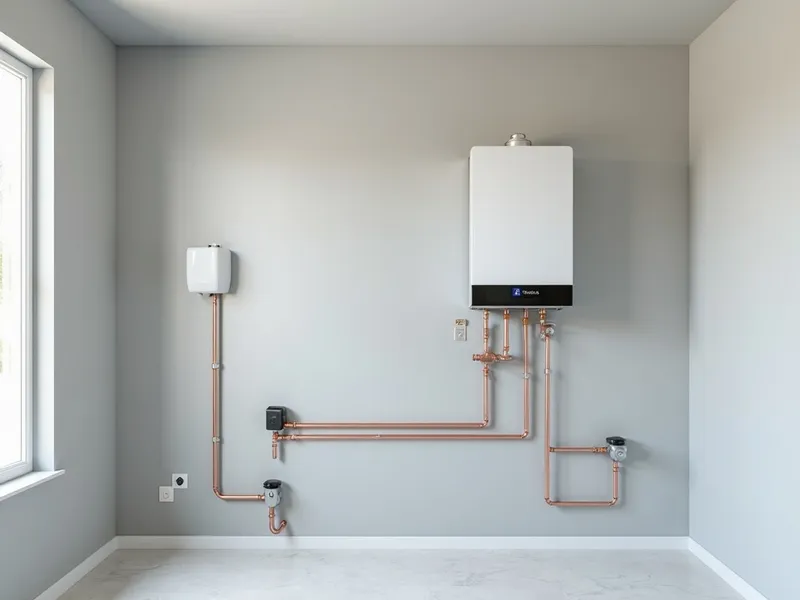
You notice the water leaving rust stains in the toilet bowl, or the tap smells faintly of chlorine, or you just moved to a house on a well and you have no idea what is actually in the water. In 2026, a whole-house water filter runs $500 to $4,500 installed for most homes. A basic single-stage sediment unit sits at the low end, and a carbon tank system with a UV stage for well water sits at the top. The 2-3 stage cartridge system that handles most city-water concerns lands squarely in the middle at $1,000 to $2,500 installed. Build your estimate below, then read what each system actually does, and which ones a handy homeowner can realistically self-install.
Estimate your cost
Equipment plus a standard professional installation on accessible PEX or copper with an existing shutoff.
A cartridge system on PEX or copper with a shutoff is a realistic DIY job. Tank systems and old galvanized pipe belong to a plumber.
A bypass valve lets you service the filter without shutting water to the whole house. Many quality housings include one; on older installs you may need to add it.
Labor and materials swing with local cost of living.
Estimated whole house water filter cost
$800 – $2,500
Most homeowners pay around $1,500
Cost breakdown
- 2-3 stage cartridge: sediment pre-filter + carbon block (city water standard)$1,500
Planning estimate based on 2026 national price data, not a quote. Get local quotes to confirm.
What drives your whole house water filter cost
- System type: a single-stage sediment housing runs $300–$1,000 installed; a 2-3 stage cartridge system $800–$2,500; a large carbon backwashing tank $1,500–$4,000; a tank-plus-UV well-water system $2,000–$5,000.
- Water source: city water usually needs sediment and carbon filtration for taste and chlorine, and a 2-3 stage cartridge system handles it. Well water often carries bacteria, iron, or hydrogen sulfide on top of sediment, which means more stages and higher cost.
- Pipe material and access: a plumber mounting a housing on accessible copper or PEX with a nearby shutoff charges $200–$500 in labor. Old galvanized pipe, tight crawlspaces, or a main line that requires cutting add $300–$800 in labor on top.
- System size and flow rate: a 1-inch port housing maintains whole-house pressure better than a 3/4-inch unit; larger housings cost more but are worth it for homes with four or more people.
- Cartridge replacement running cost: multi-stage systems need new cartridges every 3–12 months depending on water quality; budget $100–$350 per year in consumables. Tank systems backwash automatically and avoid cartridge swaps for 3–5 years at a time.
- UV add-on: a UV stage kills bacteria and viruses that carbon cannot touch. The lamp itself runs $200–$600 installed and requires an annual bulb replacement of $50–$100.
- Permits: most municipalities do not require a permit for filter-only installs that tap an existing line; check locally, as a few jurisdictions do. Permits run $100–$300 when required.
Ready for real numbers?
A calculator gets you the fair range. Local quotes confirm it for your exact home. Comparing 2–3 written quotes from licensed local pros is the single best way to avoid overpaying: ask each for the same scope in writing so the numbers are comparable.
Ways to save
- Match the system to your actual water problem: a $600 single-stage sediment filter solves well-water particle issues; a $2,500 carbon tank is overkill for clean municipal water.
- Order a water test first ($30–$150 at a certified lab, or free through your municipal supplier). Knowing exactly what is in the water prevents buying stages you do not need.
- A quality 3-stage cartridge housing from a reputable brand (iSpring, Culligan, Pentek) runs $150–$400 for the unit; self-install on PEX with push-fit SharkBite fittings is a realistic Saturday project and saves $200–$500 in labor.
- Buy cartridge replacements in multi-packs: a sediment pre-filter that costs $12 each is often $30 for a pack of four; stocking up once a year cuts the per-filter cost by 30–50%.
- Get two or three quotes for tank system installation: labor on the same unit can vary by $300 or more between plumbers.
- A bypass valve added at install time (add $60–$200) pays back immediately the first time a cartridge needs swapping, with no shutting off the whole house.
Hire it out, or do it yourself?
DIY-able for some: know your limitsA 2-3 stage cartridge housing on accessible PEX or copper is one of the more DIY-friendly plumbing jobs in the house. The housing mounts with two screws to a wall stud, SharkBite push-fit adapters connect to the supply line without soldering, and the whole job (shutting off the main, cutting the pipe, connecting the housing, and restoring flow) takes two to four hours for a homeowner comfortable with basic plumbing. A $150–$400 unit self-installed replaces a $1,000–$2,500 pro install. The cartridge system manufacturer's manual walks through the steps, and most include the mounting bracket and a filter wrench.
The line to draw is the pipe and the system size. Old galvanized pipe is a plumber job: cutting into it without the right tools creates more problems than the filter solves, and the fittings do not accept push-fit adapters reliably. Large carbon tank systems weigh 80–150 pounds, connect to the main before it branches to anything in the house, and typically need a drain line for backwash, which is not a self-install project. Anything that requires soldering copper, cutting cast iron, or routing a drain line belongs to a licensed plumber.
UV systems are an interesting middle case: the UV unit itself is a straightforward inline connection, but it goes after the carbon filter in a sequential train, and sizing the lamp to the flow rate matters for effectiveness. If you are adding UV to an existing system you already understand, that is a reasonable DIY add. If you are building a well-water treatment train from scratch (sediment, iron filter, carbon, UV), hire a water treatment specialist who works on well systems. The savings on any one component are not worth a disinfection system that underperforms.
Helpful products
Taking the DIY route, or doing part of the job yourself? These are the product categories most people buy for this project. As an Amazon Associate we may earn from qualifying purchases, and it never changes your price.
Get quotes from local pros
Angi is a national marketplace for home services. You describe the job, and water treatment contractors who work in your area contact you with their own quotes. Requesting quotes is free and you are never obliged to hire anyone.
Angi pays us a referral fee for a completed service request. The fee comes from Angi, not from you, and it does not change the estimates on this page.
Frequently asked questions
How much does a whole house water filter system cost in 2026?
Most homeowners pay $500 to $4,500 installed, depending on the system. A single-stage sediment filter runs $300–$1,000; a 2-3 stage cartridge system handling sediment and chlorine runs $800–$2,500 installed; a large carbon backwashing tank runs $1,500–$4,000; a well-water system with carbon and UV disinfection runs $2,000–$5,000. The national average for a standard whole-house system is around $1,800.
What is the difference between a whole house water filter and a water softener?
A filter removes particles, sediment, chlorine, taste, odor, and (with a UV stage) bacteria. A softener removes hardness minerals (calcium and magnesium) through ion exchange. They solve different problems. A filter does not fix hard water scale on your fixtures or in your pipes; a softener does not remove chlorine taste or sediment. Many homeowners with municipal water need only a filter. Those on hard well water often need both, installed in sequence.
How much do cartridge replacements cost per year?
For a 2-3 stage cartridge system: plan on $100–$350 per year. A sediment pre-filter cartridge runs $10–$40 and lasts 3–6 months; a carbon block cartridge runs $25–$80 and lasts 6–12 months depending on water quality and usage. Buying multi-packs cuts the per-cartridge cost by 30–50%. Large carbon tank systems backwash automatically and avoid cartridge costs entirely for 3–5 years.
Do I need a different system for well water vs. city water?
Usually yes. City water is pre-treated, so the main concerns are residual chlorine, disinfection byproducts, and sediment, which a 2-3 stage sediment-plus-carbon cartridge system handles well. Well water is untreated at source, so it can carry sediment, iron, manganese, hydrogen sulfide, and bacteria, problems that require additional filter stages and, for bacteria, a UV disinfection lamp. Test your well water at a certified lab before sizing a system.
Can I install a whole house water filter myself?
Yes, for a cartridge-style housing on accessible PEX or copper pipe with a shutoff nearby. SharkBite push-fit fittings make the connection solder-free, and the whole job typically takes two to four hours. Save $200–$500 in labor. Skip the DIY path for large carbon tank systems, galvanized pipe, and anything requiring drain-line routing; those belong to a licensed plumber.
How much does a whole house UV water filter cost?
A UV unit added to an existing filtration system runs $200–$600 installed. The lamp housing itself is $150–$400, and a plumber charges $100–$200 to connect it inline. Building a full well-water treatment train (sediment, carbon, UV) from scratch runs $2,000–$5,000 installed. UV bulbs need annual replacement at $50–$100 each.
Add this calculator to your site, free
Run a blog, forum, or local-services site? Drop this whole house water filter calculator in for your readers. Copy the code: it includes a small credit link back to us.
<iframe class="costcalc-embed" src="https://homeupgradecost.com/embed/whole-house-water-filter-cost" title="Whole House Water Filter Cost Calculator" width="100%" height="760" loading="lazy" style="width:100%;max-width:680px;border:1px solid #e2e8f0;border-radius:12px"></iframe>
<p style="font:13px/1.5 system-ui,sans-serif;margin:8px 0 0">
  <a href="https://homeupgradecost.com/whole-house-water-filter-cost" target="_blank" rel="noopener">Whole House Water Filter Cost Calculator</a> by <a href="https://homeupgradecost.com" target="_blank" rel="noopener">HomeUpgradeCost</a>
</p>
<script>window.addEventListener("message",function(e){if(!e.data||e.data.type!=="costcalc-height")return;var f=document.querySelectorAll("iframe.costcalc-embed");for(var i=0;i<f.length;i++){if(f[i].contentWindow===e.source){f[i].style.height=e.data.height+"px";}}});</script>Sources
Price ranges cross-referenced against these 2026 cost guides and contractor databases:
Filtration handles sediment, chlorine taste, and bacteria, but if the kettle scales up with white deposits, the dishwasher leaves spots, or the soap does not lather, that is hardness, not a filtration problem. A water softener is a different system with its own price.
Water Softener cost from $1,000 →