EV Charger Installation Cost Calculator (2026)
By Dan Whitlock, Home Projects Editor · Updated July 2026
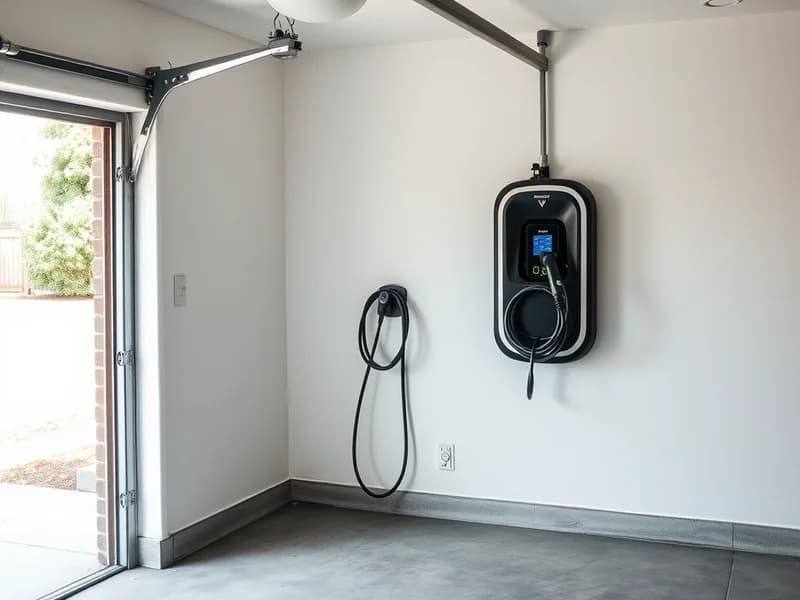
You just brought an EV home and the included 120V cord is going to take 40 hours to charge the battery. The fix, a Level 2 home charger on a 240V circuit, runs $800 to $2,400 for most homeowners in 2026, with a national average near $1,400. The charger unit itself is a retail product that you can buy online for $300–$700; the rest is what a licensed electrician charges to wire a 240V circuit from your panel to the garage. That cost swings most on two things: how far the circuit has to run, and whether your panel has room for a 40–50A breaker or needs a capacity upgrade. Build your estimate below.
Estimate your cost
Includes the charger unit and the electrical work to support it.
Distance from your electrical panel to the charger location.
A 40–50A breaker needs room in your panel. Older 100A panels often do not have it.
Labor and materials swing with local cost of living.
Estimated ev charger installation cost
$800 – $2,400
Most homeowners pay around $1,400
Cost breakdown
- Level 2 hardwired 40–48A: direct wire, max charging speed$1,400
Planning estimate based on 2026 national price data, not a quote. Get local quotes to confirm.
What drives your ev charger installation cost
- Charger unit: a quality 40–48A Level 2 charger costs $300–$700 to buy; buy it yourself online and you avoid markup.
- Circuit run: wiring a 240V circuit costs about $6–$12 per linear foot; a short adjacent run adds little, but 50+ ft through finished walls can add $500–$1,200.
- Panel capacity: a 40–50A EV circuit needs an open double-pole breaker slot. If the panel is full, a load management device ($200–$500) or full panel upgrade ($1,500–$4,000) is required before the circuit can be added.
- Charger level: Level 1 (120V, 12A) delivers 3–5 miles of range per hour and costs almost nothing; Level 2 (240V, 40–48A) delivers 25–35 miles per hour and is the practical choice for daily driving.
- Plug-in vs. hardwired: a plug-in 240V setup (NEMA 14-50 outlet) is slightly easier to swap out later; a hardwired unit is cleaner and handles higher amperage more reliably.
- Permit and inspection: most jurisdictions require a permit for a new 240V circuit, adding $50–$200 but protecting you at resale.
- Federal tax credit: the 30C tax credit for residential EV charger equipment was eliminated in 2025. Verify current incentives with your state or utility, as some local rebates remain.
Ready for real numbers?
A calculator gets you the fair range. Local quotes confirm it for your exact home. Comparing 2–3 written quotes from licensed local pros is the single best way to avoid overpaying: ask each for the same scope in writing so the numbers are comparable.
Ways to save
- Buy the charger unit yourself online: a 40–48A Level 2 charger from a reputable brand runs $300–$700 retail, and electricians often mark up supplied equipment.
- Keep the circuit run short by placing the charger on the garage wall nearest to your panel.
- If the panel is full, a load management (power-sharing) device lets the EV circuit share capacity with an existing large circuit, far cheaper than a panel upgrade.
- Get three electrician quotes; EV circuit labor varies significantly by contractor and market.
- Check your utility and state for EV charger rebates: many utilities offer $100–$500 back on Level 2 charger hardware.
- A plug-in NEMA 14-50 setup costs slightly less up front and is easier to take with you if you move.
Hire it out, or do it yourself?
DIY-able for some: know your limitsThe right split here is buy the charger yourself, hire the electrician for the circuit. A Level 2 EV charger is a consumer product: you can order one on Amazon for $300–$700, choose the amperage and features you want, and own the warranty directly. What you are paying an electrician for is the 240V circuit, not the box on the wall.
The 240V wiring itself is not DIY territory. Running a 40–50A circuit requires pulling a permit, sizing wire correctly for the run length, and passing an inspection. Mistakes in 240V wiring cause fires and void homeowner's insurance. Licensed electricians do this work in two to four hours; the labor is well worth the safety and the permit that protects you at resale.
One exception worth knowing: if your garage already has a NEMA 14-50 outlet (common in older homes that had an electric dryer or RV hookup there), you may be able to plug in a compatible Level 2 charger with no electrical work at all. Check the outlet's breaker rating: 40–50A is what you need for full-speed Level 2.
Helpful products
Taking the DIY route, or doing part of the job yourself? These are the product categories most people buy for this project. As an Amazon Associate we may earn from qualifying purchases, and it never changes your price.
Get quotes from local pros
Angi is a national marketplace for home services. You describe the job, and electrical contractors who work in your area contact you with their own quotes. Requesting quotes is free and you are never obliged to hire anyone.
Angi pays us a referral fee for a completed service request. The fee comes from Angi, not from you, and it does not change the estimates on this page.
Frequently asked questions
How much does EV charger installation cost in 2026?
A Level 2 home EV charger installation runs $800 to $2,400 for most homeowners, with a national average near $1,400. That covers the charger unit ($300–$700), a new 240V circuit ($400–$1,200 depending on run length), and permit. Panel upgrades, if needed, add $1,500–$4,000 on top.
How much does level 2 EV charger installation cost?
Level 2 installation (240V circuit, 40–48A) runs $800 to $2,400 all-in for a typical home with panel capacity. A plug-in NEMA 14-50 setup is at the lower end ($600–$1,800); a hardwired 48A unit with a longer circuit run is at the higher end. This is the standard home-charging upgrade that delivers 25–35 miles of range per hour.
Do I need to upgrade my electrical panel for an EV charger?
Only if your panel is at capacity. A 40–50A EV circuit needs an open double-pole breaker slot. Many 200A panels have room; older 100A panels often do not. A load management device ($200–$500) can share an existing large circuit without an upgrade. A full 100A-to-200A service upgrade runs $1,500–$4,000 when one is needed.
Can I install an EV charger myself?
You can mount the charger unit yourself, but the 240V circuit wiring requires a licensed electrician and permit in virtually every jurisdiction. The split that makes sense: buy the charger unit yourself online, hire a licensed electrician for the circuit work.
What is the difference between Level 1 and Level 2 EV charging?
Level 1 uses a standard 120V outlet and adds 3–5 miles of range per hour, fine for PHEVs but too slow for a full BEV. Level 2 uses a 240V circuit at 40–48A and adds 25–35 miles per hour, fully charging most EVs overnight. Most EV owners upgrade to Level 2 within the first month.
Is there a federal tax credit for home EV charger installation in 2026?
The federal 30C residential EV charger tax credit was eliminated effective January 2025. Some states and utilities still offer rebates. Check your state energy office and your utility's website for current programs before buying.
Add this calculator to your site, free
Run a blog, forum, or local-services site? Drop this ev charger installation calculator in for your readers. Copy the code: it includes a small credit link back to us.
<iframe class="costcalc-embed" src="https://homeupgradecost.com/embed/ev-charger-installation-cost" title="EV Charger Installation Cost Calculator" width="100%" height="760" loading="lazy" style="width:100%;max-width:680px;border:1px solid #e2e8f0;border-radius:12px"></iframe>
<p style="font:13px/1.5 system-ui,sans-serif;margin:8px 0 0">
  <a href="https://homeupgradecost.com/ev-charger-installation-cost" target="_blank" rel="noopener">EV Charger Installation Cost Calculator</a> by <a href="https://homeupgradecost.com" target="_blank" rel="noopener">HomeUpgradeCost</a>
</p>
<script>window.addEventListener("message",function(e){if(!e.data||e.data.type!=="costcalc-height")return;var f=document.querySelectorAll("iframe.costcalc-embed");for(var i=0;i<f.length;i++){if(f[i].contentWindow===e.source){f[i].style.height=e.data.height+"px";}}});</script>Sources
Price ranges cross-referenced against these 2026 cost guides and contractor databases:
The garage now draws more power than the kitchen. A whole-house generator is worth pricing while the electrician is still in your thinking: knowing what it costs to keep the house powered through an outage is a different number than most people expect.
Whole House Generator cost from $5,000 →